What Is Expressive Writing? A Gentle Explainer for New Journal Keepers
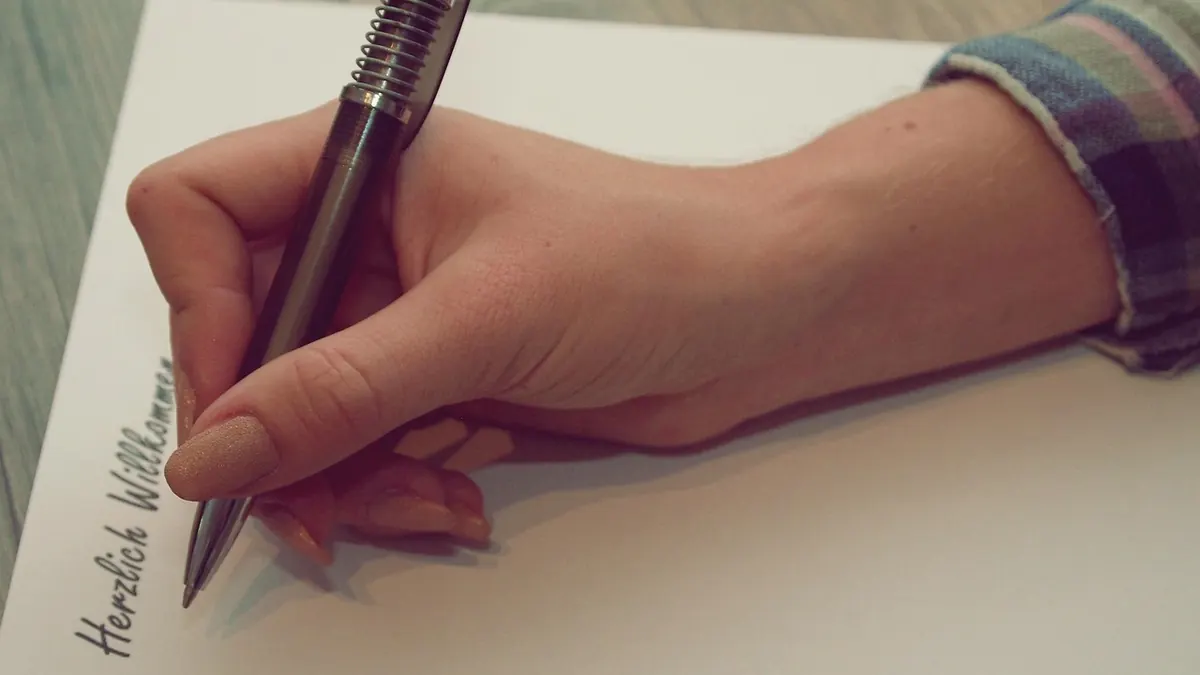
Some evenings the day sits on your chest and refuses to shift. Nothing dramatic happened. You did not argue with anyone. Yet the same thought keeps circling: a remark from a colleague, a message you still have not answered, a money worry that arrives the moment you try to rest.
Writing it down is one of the oldest, cheapest and most private things you can do about that. If you have come across the phrase expressive writing and wondered whether it needs training or a therapist's chair, it does not. It needs a pen, a bit of time and permission to be untidy.
What expressive writing actually is
Expressive writing is plain, honest writing about your own feelings and experiences, usually in short bursts of 15 to 20 minutes, without stopping to edit, spellcheck or make yourself sound reasonable. That is the whole method.
It differs from an events diary in one important way. A diary records what happened. Expressive writing goes after what it felt like — the embarrassment, the relief, the anger you are not sure you are allowed to have.
Compare these two entries about the same afternoon:
Diary: "Meeting ran over. Missed the 17:40 bus. Got home late."
Expressive writing: "I was furious, and mostly with myself for not speaking up when I had the chance. That is the third time this month I have swallowed it instead of saying it, and I hate that I do that."
Notice there is no tidy ending. Expressive writing is not a report and it is not a plan. It is the unedited version.
What people report getting from it
Researchers have been studying this kind of writing for decades and the findings are mixed. Some trials show modest benefits; others show very little. What tends to come up either way is that writing about something emotionally charged can make it easier to make sense of afterwards.
Journal keepers describe the same handful of things:
- A feeling of relief, like setting down something heavy you had been carrying without noticing.
- Spotting a pattern. "I write about the same person every week, and I have never once said anything to them."
- Quieter evenings. Fewer thoughts circling at midnight because they have already been said somewhere.
- Clarity about the next step, even a small one.
None of that is guaranteed, and none of it is a cure. Expressive writing does not change your job, your rent or your relationships. It changes what you can see about them.
How to try it: the simple version
Most research versions follow roughly the same shape. You can copy it tonight.
- Pick one thing. Not your whole life, not your personality. One event or one worry with some charge on it.
- Set a timer for 15 minutes. Fifteen is plenty for a first go. Twenty if you are comfortable.
- Keep the pen moving. No stopping, no rereading, no rewriting. If you cannot think of a word, write "something" and carry on.
- Follow feelings, not facts. You already know the facts. What you felt is the part that tends to stay unsaid.
- Stop when the timer goes. Close the notebook. You do not have to read it back, and you do not have to do anything with it.
Some people write to themselves in the second person — "you were exhausted and you handled it badly" — and find that easier than "I". Try it if the first person feels too close.
Why it can feel worse before it feels better
Writing honestly about a difficult thing can leave you raw for an hour, or bring up something you had filed away. That is common, and it is usually short-lived — but it is a reason to be careful about when and how often you do it.
- Do not make your first attempt the hour before bed.
- Do not write about something heavy twenty minutes before a meeting or a difficult conversation.
- Keep sessions short. Fifteen minutes of real feeling goes further than an hour of grinding.
- If a topic keeps leaving you distressed rather than clearer, put it down and choose a different one.
- If you write about the same thing for weeks and nothing shifts, that is a signal to talk to someone, not to try harder.
Keeping it kind, and keeping it private
Expressive writing only works if you are honest, and you are only honest when you are not being watched. So give yourself a private place for it. A paper notebook in a drawer. A locked file. A folder that does not sync to a shared device. Somewhere nobody will flick through it over breakfast.
A few other things that help:
- Date it. One line at the top, so future you knows what this was.
- Allow mess. Crossings out, half sentences, terrible spelling. None of it matters.
- Write angry, but do not send it. A page is a safe place for the version of you that wants to tell someone exactly what you think.
- Have an exit. If you feel shaky, close the book and do something physical: wash up, walk round the block, make tea.
- Miss days without guilt. This is a tool, not a streak to protect.
Where it sits next to therapy
Expressive writing sits between a diary and a conversation. A diary records your life. Therapy involves another person who can respond, question and help you change something. Expressive writing is you, alone, on one page, working out what you think.
That makes it a decent first step if you are not ready to talk, and a useful thing to do between sessions if you are. It is not a diagnosis, a treatment or a replacement for proper support. If you are living with persistent low mood, anxiety, grief or memories that push into your day, please speak to your GP or a qualified professional. Writing can sit alongside that help; it
Photo: HolgersFotografie / Pixabay